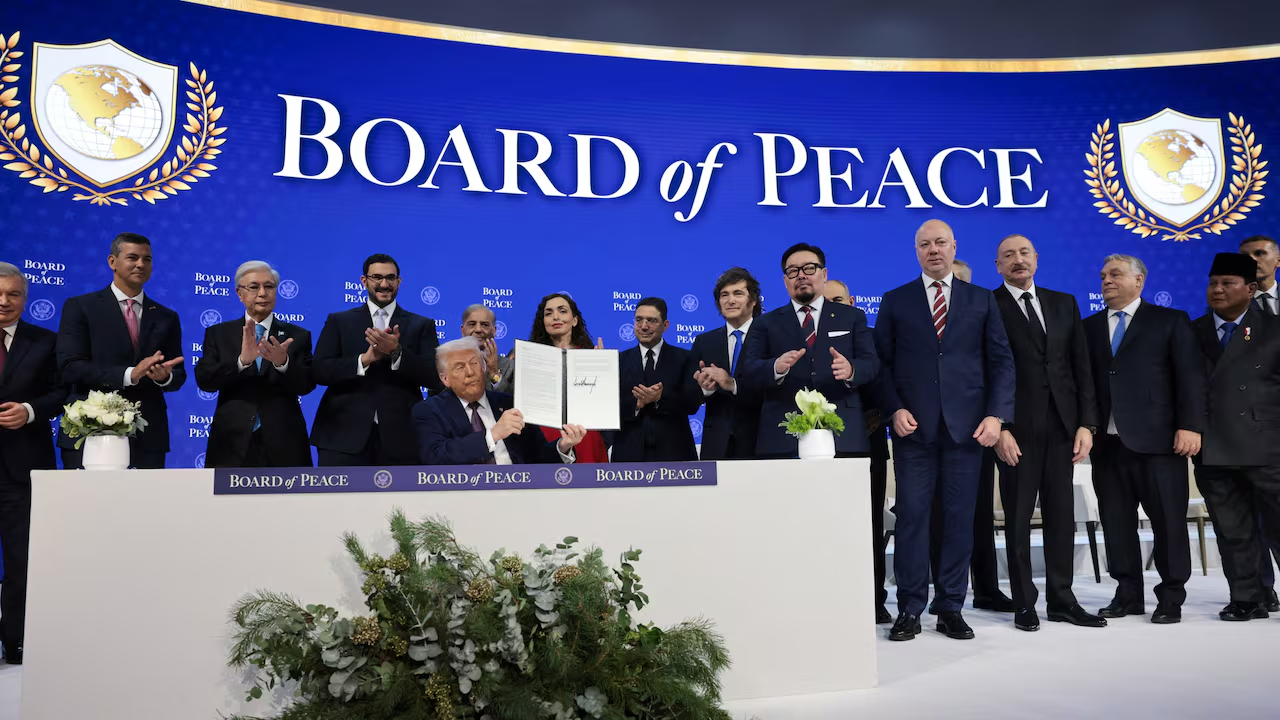
Meta Description: A biblical look at the proposed “Board of Peace” in the news today and how current peace initiatives may be setting the stage for future Bible prophecy—without claiming fulfilment.

In recent weeks, the idea of a proposed “Board of Peace” associated with U.S. President Donald Trump has appeared frequently in the news. As with many peace-focused initiatives tied to influential political figures, this development has naturally attracted attention within Bible prophecy circles.
It is important to state clearly from the outset: this is not the fulfilment of Daniel 9:27. That prophetic covenant has not yet been confirmed. You can find more information on this scripture here.
At the same time, Scripture encourages believers not only to watch for fulfilment but also to observe the conditions forming that will one day allow prophecy to be fulfilled.
“So likewise ye, when ye see these things come to pass, know ye that the kingdom of God is nigh at hand.”
Luke 21:31
This places current peace-related developments firmly in the category of discernment, not declaration.
Why This Matters
This development is not prophetic fulfilment — but it may be prophetic preparation.
Bible prophecy often unfolds gradually. Peace initiatives, councils, and diplomatic structures can help condition the world for the type of agreement Scripture says will one day be confirmed.
Prophecy Often Precedes Fulfillment With Preparation

Biblical prophecy shows that major end-time events are rarely sudden in origin. Instead, they are preceded by long periods during which political, social, and spiritual conditions take shape.
Before the covenant of Daniel 9:27 can be confirmed, several factors must already be in place:
- A global desire for peace and stability
- Confidence in political or diplomatic solutions
- Willingness to accept guarantees from powerful mediators
- A Middle East environment primed for agreement
Peace boards, accords, and advisory bodies help shape the mindset of nations, reinforcing the belief that peace can be engineered and sustained through human leadership.
“Peace and Safety” — An End-Time Atmosphere
The Apostle Paul warned of a specific global mindset that would exist before sudden and dramatic change:
“For when they shall say, Peace and safety; then sudden destruction cometh upon them…”
1 Thessalonians 5:3
This verse does not condemn the pursuit of peace itself. Rather, it warns against false confidence in man-made peace, especially peace that exists apart from God’s redemptive plan.
The idea of a formalised Board of Peace reflects this end-time atmosphere — the belief that peace can be managed, guaranteed, and sustained through institutional authority.
Israel Remains Central to Prophetic Peace

Any meaningful discussion of prophetic peace must involve Israel because Scripture consistently places Israel at the centre of end-time events.
While details surrounding the proposed Board of Peace remain limited, history demonstrates that:
- Major peace initiatives frequently involve Israel and its neighbours.
- Israel-centered agreements attract global urgency and support
- The world continually seeks a “lasting solution” to the Middle East
Daniel 9:27 speaks of a covenant “with many”, suggesting international involvement and broad acceptance. Developments that normalise multilateral peace efforts involving Israel should therefore be observed carefully, even if they fall short of prophetic fulfilment. You can find an in-depth article on Jerusalem’s importance in Bible prophecy here.
Not Fulfillment — But a World Being Prepared
It bears repeating: no current peace board, agreement, or proposal fulfils Daniel 9:27 at this time.
However, Scripture never instructs believers to ignore early developments. Instead, we are told to watch attentively.
“Surely the Lord GOD will do nothing, but he revealeth his secret unto his servants the prophets.”
Amos 3:7
Watching does not mean assigning prophetic identities to modern leaders. It means recognising when the language, structures, and expectations described in prophecy are becoming normalised.
From this perspective, peace initiatives — especially those presented as historic, bold, or final — may function as preparatory steps, even if unintentionally.
The Only True and Lasting Peace

Scripture is clear that lasting peace will not ultimately come through councils, boards, or political agreements.
“For he is our peace…”
Ephesians 2:14
Jesus Christ alone is the Prince of Peace (Isaiah 9:6). Any peace achieved apart from Him will be temporary.
That is why believers are called to remain watchful, grounded, and hopeful — neither dismissing current events nor overstating their prophetic significance.
Conclusion: Watchful, Not Reactionary
The discussion surrounding a proposed Board of Peace provides an opportunity for biblical reflection rather than sensationalism.
It reminds us that:
- The world is increasingly desperate for peace
- Political solutions are becoming more centralised.
- The prophetic stage continues to take shape
Fulfilment will come in God’s perfect time. Until then, Scripture calls believers to watch, pray, and point others to the only peace that truly endures.
“And when these things begin to come to pass, then look up, and lift up your heads; for your redemption draweth nigh.”
Luke 21:28